Roofers for Old Town, Suwanee
Mornings in Old Town start on the Suwanee Creek Greenway. Walkers and cyclists roll out from the trailheads, the old railroad depot area off Buford Highway eases into its day, and streets of early-1900s cottages sit under trees that were here long before any of us. Roofs in this corner of Suwanee carry real history, often several generations of shingles over framing and decking that predate modern building code. We are a local Suwanee-area roofing crew that treats older structures with respect and tells you plainly what lives under those layers. The inspection costs nothing, and the estimate arrives in writing.
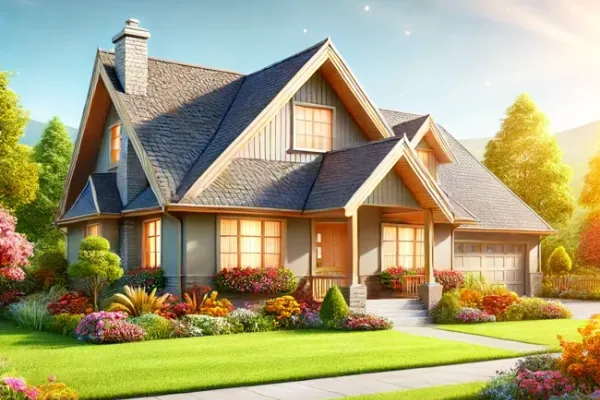
Old Town roofs carry a century of Suwanee history
The blocks around the depot are where Suwanee began, and the housing shows it. Small-lot homes and cottages from the early 1900s line short streets off Buford Highway, many of them reroofed two or three times over the decades without anyone ever looking hard at what those layers were covering. Rafters cut from true-dimension lumber, plank decking with gaps between boards, and framing that has settled for a hundred years all behave differently from anything in a newer subdivision.
Our crew approaches Old Town with a restoration mindset. GAF and CertainTeed lines installed to the manufacturer's book keep material warranties intact, and we stand behind the labor in writing.
Tear-offs that respect old framing
Pulling several shingle layers off a 1900s cottage is careful, deliberate work. The crew watches for soft decking underfoot, staged loads that old rafters were never asked to carry, and original details worth preserving instead of burying.
Leak tracing through layered roofs
Water on an older roof travels between layers before it ever shows inside. We trace the stain to the actual entry point, check the attic side where the framing tells the truth, and fix the cause rather than the symptom.
A crew already minutes away
Our crew is based in the Sugar Hill and Suwanee area, so an Old Town call is not a long-distance commitment. Free inspections, honest recommendations, and 24/7 storm response when a summer cell comes through Gwinnett County.
What hides under a depot-era shingle layer
An early-1900s Old Town cottage was framed with materials nobody sells anymore. Rafters are full true-dimension lumber, decking is often individual planks with gaps between boards rather than plywood sheets, and there may be no underlayment at all beneath the oldest layer. When newer shingles were installed straight over the old ones, every fastener had to find solid wood through that stack, and plenty missed. We start from the attic when possible, reading water staining, daylight through gaps, and sagging between rafters before ever quoting the work. It is a slower way to look at a roof. It is also the only way to price an Old Town job honestly instead of discovering the real scope halfway through a tear-off.

When the second layer has to come off
Layering new shingles over old ones was common practice in Suwanee for decades, and code allows two layers at most. Many Old Town homes are already there. Beyond the code question, a layover hides the decking, traps heat that ages the new shingles faster, and adds weight to framing that has been settling for a century. A full tear-off costs more upfront and is nearly always the better spend here, because it exposes rot, lets the crew replace bad boards, and resets the roof with synthetic underlayment, ice and water shield in the valleys, and new drip edge at the eaves. The cottage gets a roof system built to current standards without losing the look that makes the street feel like Old Town.

Creek air and shaded slopes near the Greenway trailheads
Streets near the Suwanee Creek Greenway sit low, hold humidity, and spend much of the day in tree shade. North-facing slopes in this pocket of Suwanee dry slowly after rain, which invites moss and algae streaking that shortens shingle life well before its rated span. The fix is a combination, not a single trick. Algae-resistant shingle lines, zinc or copper strips near the ridge, trimmed branches that let slopes breathe, and balanced attic ventilation so the deck dries from below as well as above. During an inspection we note which planes hold moisture and where granule loss is running ahead of schedule, then build the recommendation around how this specific microclimate treats a roof.

Cottage chimneys and the flashing that guards them
Many Old Town homes still have their original masonry chimneys, and the joint where brick meets roof is the most common leak path on houses of this age. Step flashing laid course by course, counter flashing cut into the mortar, and a sound crown up top all have to work together, and on a century-old chimney at least one of the three usually needs attention. Old repairs made with roofing tar buy a season and then fail. We detail these joints properly, check pipe boots and vent penetrations while up there, and flag any brick or mortar work the chimney itself needs, so the fix lasts instead of joining the long history of patches.
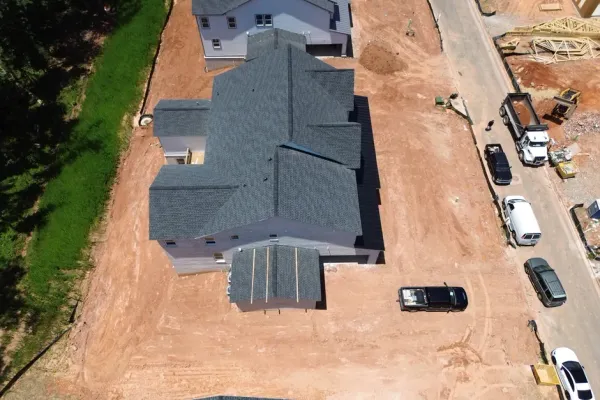
Working small lots without wrecking the garden
Old Town lots are compact, driveways are short, and the house next door is close enough to chat with. Staging a reroof here takes planning that suburban crews rarely bother with. We position the dumpster and material drops to keep the street usable, cover plantings and beds that owners have tended for years, and keep debris contained on a footprint measured in feet rather than yards. Gutters get the same attention as the field of the roof, since undersized or clogged runs on a small lot dump water straight against a hundred-year-old foundation. Every day ends with a cleanup pass and a magnetic sweep, because nails in a yard this size will absolutely find a bare foot or a bike tire.
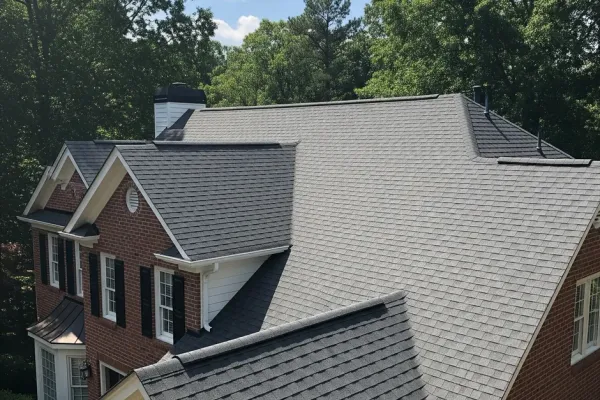
Old Town moves at its own pace. The Suwanee Creek Greenway trailheads pull a steady stream of walkers and cyclists through the neighborhood, the depot area off Buford Highway anchors the historic heart of the city, and the early-1900s cottages on their small lots have watched Suwanee grow from a railroad stop into a Gwinnett County destination. People buy here for the character. The trade-off is that character comes with roofs whose full story spans a century, and most of that story was never written down.
The depot district was built well, and built long ago
Houses from this era were framed by carpenters working with old-growth lumber and no plywood, which is why so many have outlasted newer construction. The same age that gives them charm also gives them quirks. Plank decking with gaps, rafters on spacing no modern table lists, and shingle layers stacked through the decades all mean an Old Town roof cannot be quoted from the driveway. A proper roof inspection here includes the attic, where staining on the underside of the deck shows every leak the roof has ever had and settles the repair-or-replace question with evidence instead of guesswork.
The calls Old Town actually makes
Two problems account for most of the phone calls from this part of Suwanee. The first is the slow ceiling stain, usually blamed on the newest shingles and usually caused by something older, a nail hole between layers, a rusted valley, a pipe boot that gave up years ago. Careful roof leak repair traces the water to its entry point rather than painting over the evidence. The second is the chimney. Original masonry with tired flashing leaks in ways that mimic roof failure, and half the chimney complaints turn out to need chimney repair at the flashing and crown rather than new shingles at all. Sorting out which problem you actually have is the whole job. Fixing the wrong one costs the same and solves nothing.
What reroofing an older cottage costs
Replacement pricing in Suwanee starts around $2,999 for straightforward roofs, and Old Town homes usually land above entry level for honest reasons. Multiple-layer tear-offs add labor and disposal weight, plank decking normally needs some board replacement, and chimney flashing details take time that a clean 2005 subdivision roof never asks for. Steepness matters too, since cottage gables often pitch sharper than modern framing. None of this is unknowable in advance. You can price out the job online before you call, then let us firm the number up with an attic check and a full walk of the roof. The written estimate carries a decking allowance stated plainly, which is the difference between a real Old Town quote and a lowball that grows mid-project.
Trailheads to tracks, one crew for the historic side
Service in Old Town runs from the Greenway trailheads to the streets around the depot, and the same crew covers the rest of Suwanee beyond Buford Highway. Newer parts of the city bring their own puzzles, like the connected party-wall rooflines in Town Center a few blocks away, but the promise stays constant across every address in Gwinnett County we serve. Show up when scheduled, walk the whole roof, put the findings in photos and the price in writing, and back the work with a real workmanship warranty. If your cottage is due for its first honest look in decades, set up a free inspection online and get the full story of what those layers have been hiding.
My Old Town house already has two shingle layers. What are my options?
A full tear-off is the realistic path. Georgia follows the two-layer limit, so a third layer is off the table, and stripping to the decking is honestly what a home this age deserves anyway. The tear-off exposes plank decking so soft or split boards can be replaced, lets the crew install modern underlayment and ice and water shield, and resets flashing at chimneys and walls. We price the likely decking allowance in the written estimate up front, so the number you approve already reflects what a layered Old Town roof usually reveals.
Can the original decking stay when the roof is replaced?
Often most of it can. Old-growth plank decking is dense, durable wood, and boards that are dry and sound hold fasteners well. The crew walks the deck after tear-off, marks boards that are rotted, split, or worn too thin, and replaces only what fails, keeping solid original material in service. Where plank gaps are too wide for modern shingle fastening, an overlay of sheathing creates a uniform nailing surface. You get photos of the deck before anything gets covered, so you see exactly what stayed and what changed.
Will a modern shingle look right on an early-1900s cottage?
Yes, with the right profile and color. Architectural shingles from GAF and CertainTeed come in lines whose shadow and texture sit comfortably on older rooflines, and muted historic colors suit the depot district far better than builder beige. On steep cottage gables the shingle is a big share of what you see from the street, so we bring samples and let you judge them against the actual house in actual daylight. Neighbors have made these choices well all over Old Town, and the streetscape shows it.
Why do roofs near Suwanee Creek stay damp so long after rain?
Low elevation, creek humidity, and heavy shade work together. Air near the Greenway corridor holds more moisture, and shaded north slopes may not see direct sun until afternoon, so water lingers on the shingle surface for hours longer than on an open lot. That extended wet time feeds moss and algae and accelerates granule loss. Trimming overhanging limbs, adding zinc or copper strips at the ridge, choosing algae-resistant shingles at replacement time, and keeping gutters clear all shorten the drying cycle and protect the roof's working life.
An honest read on an older Suwanee roof
Layered shingles, mystery stains, a chimney that drips every February. Whatever your Old Town cottage is doing, the first step is a free inspection from a crew that has seen a hundred years of Suwanee roofing decisions and can tell you which ones your house inherited.
Not sure what a new roof runs? Estimate your roof cost in Suwanee, measured from satellite imagery, or run a storm & insurance damage check.